Buyers searching for activated carbon for sugar decolorization, activated carbon for oil decolorization or simply a decolorizing carbon supplier are usually trying to settle three things: which grade actually removes their colour bodies, which number on the Certificate of Analysis predicts it, and whether the material can arrive in days rather than after an ocean shipment. This guide answers those questions for the powdered activated carbons Zenith Nutra Products holds in Ronkonkoma, Long Island, New York, written for sugar and syrup processors, glycerine and edible-oil refiners, fermentation and flavour plants, and pharmaceutical and fine-chemical manufacturers buying by the bag or pallet.
In short: for decolourising sugar syrups, glycerine, edible oils and fermentation broths, specify powdered hardwood activated carbon and judge it on molasses number (≥ 350 on this grade), not iodine number. Use coconut shell carbon where the target is small molecules, odour and taste, and acid-washed low-ash carbon where leachable minerals would contaminate a pharmaceutical or high-purity stream. All three ship within 3–7 business days from US stock. Zenith does not publish list prices, so request a quote with the liquid, colour target, quantity and ship-to ZIP.
Molasses number vs iodine number: which predicts decolourising?
The two numbers measure different pore populations, and confusing them is the most common reason a carbon underperforms in a decolourising step.
| Iodine number | Molasses number | |
|---|---|---|
| What it measures | Adsorption of a small molecule (iodine), expressed in mg/g | Removal of colour from a standard molasses solution |
| Pores it reflects | Micropores — total surface area and small-molecule capacity | Larger mesopores and transport pores that admit large colour bodies |
| Best predictor for | Odour, taste and small-molecule duty; capsule-grade carbon | Sugar, syrup, glycerine, oil and broth decolourising |
| Typical Zenith values | Hardwood ≥ 700 mg/g; coconut shell ≥ 1000 mg/g; acid-washed ≥ 1000 mg/g | Hardwood ≥ 350 (not stated for the coconut shell grades) |
A carbon can carry a superb iodine number and still decolourise poorly, because the colour bodies in syrups and oils are too large to enter micropores. That is why the hardwood grade, with the lower iodine number, is the decolourising grade.
Compare molasses numbers like-for-like. Molasses test methods differ between producers — the molasses solution, pH and reference carbon vary, and some methods report the amount of carbon needed for a set colour removal, where a lower figure is better. Before comparing two suppliers' numbers, ask which method each COA uses, or better, run both carbons in a jar test on your own liquid.
Decolourising and purification grades in stock in Ronkonkoma, NY
The table lists the typical specification published on each product page. Values are typical; the Certificate of Analysis for your lot governs.
| Hardwood Activated Charcoal Powder | Coconut Shell Activated Carbon Powder | Acid-Washed Activated Carbon (Low Ash) | |
|---|---|---|---|
| Role | Decolourising (large colour bodies) | General adsorption, food grade | Low-leachables purification |
| Feedstock / activation | Hardwood; steam / chemical activation | Coconut shell; steam activation | Coconut shell, acid washed |
| Pore structure | Predominantly mesoporous | Predominantly microporous | Coconut shell pore structure retained after washing |
| Molasses number | ≥ 350 | — | — |
| Iodine number | ≥ 700 mg/g | ≥ 1000 mg/g | ≥ 1000 mg/g |
| Particle size | 200–325 mesh | 200–325 mesh | Powder 200–325 mesh, or granular |
| Ash | ≤ 8% | ≤ 5% | ≤ 1.0%; extractable iron ≤ 50 ppm |
| pH | 5–8 | 6–10 | 5–7 |
| Moisture | ≤ 10% | ≤ 10% | ≤ 5% |
| Heavy metals | ≤ 20 ppm | ≤ 10 ppm | ≤ 5 ppm |
| Grade / listings | Food / technical grade; Kosher, Halal, REACH registered | Food grade; Kosher, Halal, Non-GMO, Vegan, REACH registered | Pharmaceutical grade; cGMP; extractables data supplied; Kosher, Halal |
| MOQ | 25 kg | 25 kg | 20 kg |
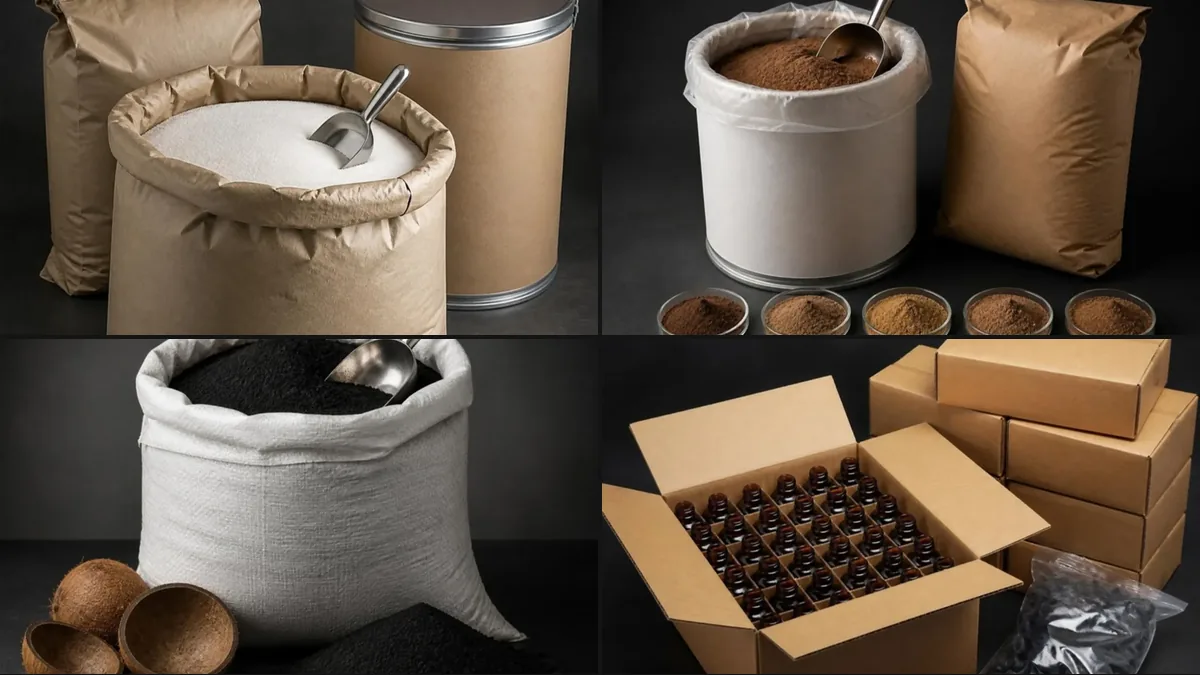
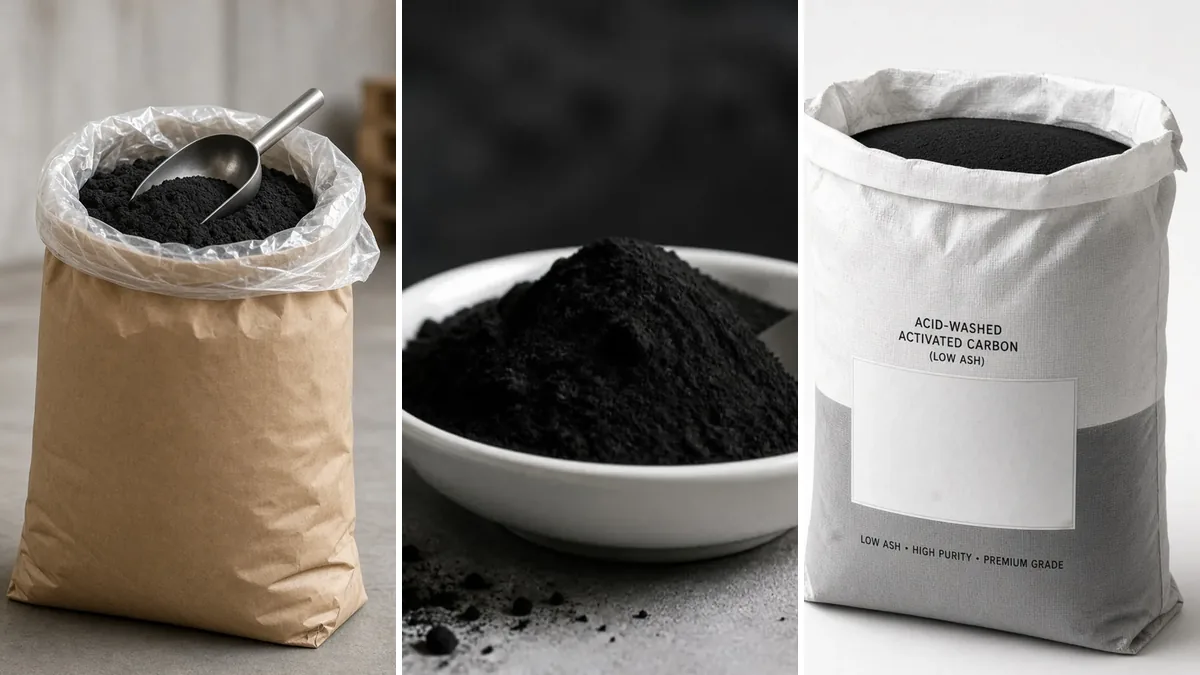
| Packaging | 20 kg multi-wall kraft bags with PE liner | 25 kg multi-wall kraft bags with PE liner; 1 kg and 5 kg sampling pouches | 20 kg fibre drums with double PE liner, or 25 kg lined bags |
| Lead time | 3–7 business days from US stock | 3–7 business days from US stock | 3–7 business days from US stock |
For packed columns and flowing liquids rather than batch treatment, the powder will blind the bed; use granular coconut shell carbon (8×30, 12×40 or 20×50 mesh) instead.
Matching the grade to the liquid
| Liquid or process | Typical target | Grade to start the jar test with |
|---|---|---|
| Sugar and syrup decolourising | Colour bodies formed in processing | Hardwood powder (molasses number ≥ 350) |
| Glycerine and edible-oil purification | Colour and trace impurities | Hardwood powder |
| Fermentation broth clarification | Colour and large organics | Hardwood powder |
| Beverage and spirit polishing | Off-notes, light colour | Hardwood powder in batch, or granular coconut shell in a column |
| Pharmaceutical intermediate and API decolourising | Colour without leachable iron or ash | Acid-washed low-ash carbon; USP grade where the monograph is cited |
| High-purity chemical decolourising | Colour with minimal extractables | Acid-washed low-ash carbon |
For a wider grade-selection table covering capsules, cosmetics and water, see choosing the right activated carbon grade.
How powdered carbon decolourising works in batch
Powdered hardwood carbon is used in batch treatment: the powder is contacted with the liquid, held, and then filtered out. Dose, temperature, contact time and filter aid depend on the liquid and on the colour target, so they are set by a jar test rather than read from a data sheet.
- Define the target — the colour method and value you must reach, plus any taste or odour target.
- Jar-test a sample — run the candidate grade on your own liquid at two or three doses and record colour removal.
- Check filterability — confirm the spent carbon separates cleanly on your filter at plant viscosity.
- Lock the specification — write the molasses number, mesh, ash, pH and moisture limits into the purchase specification so every lot COA can be checked against it.
Qualified buyers can request a sample of 100 g to 1 kg; samples are charged at cost with freight, and the charge is credited in full against a first production order. Send the liquid, the colour target and your current carbon specification so the right grade is sent.
Documents supplied with each lot
- Lot-specific Certificate of Analysis
- Safety Data Sheet (SDS)
- Technical and specification sheet
- Allergen, GMO and gluten statements
- Kosher and Halal certificates where applicable
- Full lot traceability records
- Extractables data on the acid-washed grade
Ordering, shipping and terms
| Item | Detail |
|---|---|
| Stock location | Ronkonkoma, Long Island, New York |
| Dispatch | 3–7 business days of a cleared order for materials held in US stock |
| Carbon packaging | 20 kg or 25 kg multi-wall bags; fibre drums on the acid-washed grade |
| Domestic freight | Parcel for small quantities, LTL freight for pallets |
| Trade terms | FOB, CIF and DDP quoted |
| Payment | Opening orders prepaid by wire or ACH; Net 30 for established accounts after credit review |
| Quality claims | Within 30 days of delivery, with lot number, retained sample and supporting analysis |
Decolourising carbon RFQ checklist
- Liquid to be treated (sugar syrup, glycerine, edible oil, broth, intermediate) and its viscosity at process temperature.
- Colour target and the method you measure it by.
- Current carbon and its specification, if you are replacing one.
- Critical COA lines: molasses number (and method), iodine number, mesh, ash, pH, moisture, heavy metals.
- Leachables limits (ash, extractable iron) if the stream is pharmaceutical or high-purity.
- Grade listing needed: food, technical, pharmaceutical; Kosher or Halal.
- Quantity per order and annual volume, packaging preference, and ship-to ZIP.
- Documents your QA team needs on file.
Related guides
- Iodine number, mesh and ash: choosing the right activated carbon grade
- USP vs food-grade activated charcoal powder: bulk buyer guide
- East Coast food-grade activated charcoal stock from Ronkonkoma, NY
- Dietary supplement raw material supplier in New York: Long Island stock guide
Request a quote
Send the liquid, colour target, current carbon specification, quantity and ship-to ZIP. Request a quote, email sales@zenithnutraproducts.com or call +1 (631) 819-0355, Monday to Friday, 9:00am–6:00pm ET.