Search for a monk fruit extract supplier or monk fruit extract manufacturer and most results are factory listings at origin or national distributor catalogues. Both can be the right source. The problem for a US purchasing or QA team is telling them apart, and knowing which documents prove that a “50% Mogroside V” powder is what the label says. This guide explains how monk fruit extract is made, where a supplier sits in that chain, and what to verify before the first purchase order. It is written for supplement brands, food and beverage manufacturers and co-packers buying drums, not retail jars.
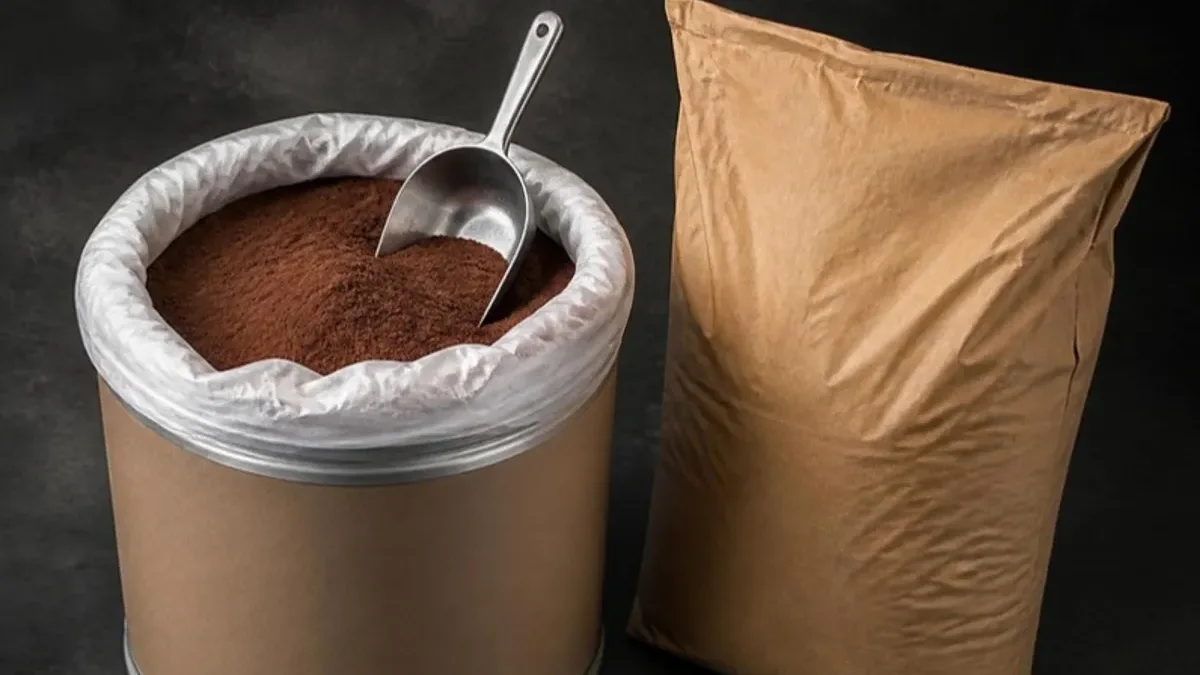
Zenith Nutra Products stocks Monk Fruit Extract Powder (Mogroside V 50%) in Ronkonkoma, Long Island, New York, with a 5 kg MOQ and typical dispatch in 3–7 business days from US stock. It ships in 20 kg fibre drums with a double PE liner, and 1 kg and 5 kg foil pouches are available for sampling. Zenith does not publish list prices, so request a quote with quantity and ship-to ZIP.
How monk fruit extract is made
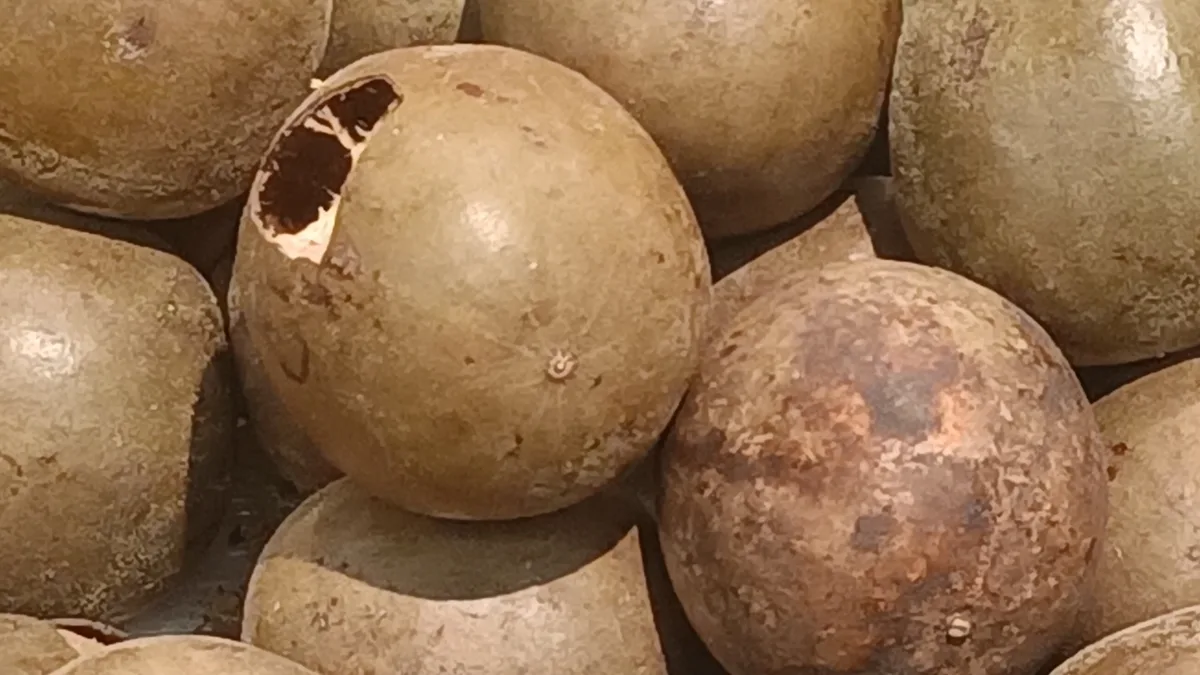
Monk fruit extract comes from the fruit of Siraitia grosvenorii (luo han guo). The sweet compounds are mogrosides, and mogroside V is the main one. Public regulatory documents describe broadly the same process: the Food Chemicals Codex monograph for Monk Fruit Extract, and the manufacturing dossiers reviewed by Food Standards Australia New Zealand and the European Food Safety Authority. Individual manufacturers vary the details.
- Crushing and water extraction. Fresh or dried fruit is crushed or shredded and extracted with hot water, often in several stages.
- Clarification. Proteins, pectin and other insoluble material are removed by heating, settling, centrifuging or membrane filtration.
- Resin adsorption. The clear juice passes through a food-grade adsorbent resin. Mogrosides bind to it, while sugars, salts and other water-soluble compounds wash through.
- Ethanol elution. The mogrosides are released from the resin with a food-grade water–ethanol solution.
- Further purification (higher grades). Extra resin, ion-exchange or decolourising steps raise the mogroside V content and lower residual sugars. This is the main difference between a 25% grade and a 50% or higher grade.
- Solvent removal and concentration. The ethanol is removed by distillation or evaporation under vacuum.
- Spray drying. The concentrate is spray-dried into a light yellow to off-white powder. It is then sieved, blended to the target assay, tested and packed.
The process tells you what to check on paper:
- Residual solvent: ethanol is used, so the certificate should show a residual ethanol result.
- Assay: the mogroside V figure should be measured by HPLC.
- Carrier: the certificate should say whether anything was added after drying, such as maltodextrin or erythritol.
Extract, juice concentrate and “monk fruit sweetener” are different products
| What the listing says | What it usually is | What to ask |
|---|---|---|
| Monk fruit extract, Mogroside V 25% / 50% / 80% | A purified, spray-dried extract standardised to a mogroside V assay | Mogroside V by HPLC on the lot COA; whether any carrier is present |
| Total mogrosides 80% | The sum of all mogrosides. Mogroside V may be only 20–25% of the powder | The separate mogroside V by HPLC figure. Total mogrosides is not the same specification |
| Monk fruit juice concentrate | A concentrated fruit juice, liquid or powder, with low mogroside V content | Brix or solids, mogroside V content and sugar content |
| Monk fruit sweetener (1:1) | A blend, usually monk fruit extract with allulose or erythritol for bulk | The ratio, the bulking agent and a homogeneity check |
If you need a ready-made 1:1 product rather than a high-intensity extract, Zenith supplies a monk fruit & allulose sweetener blend. The standard blend has a 25 kg MOQ, and custom ratios start at 100 kg. To choose between assays, see Mogroside V grades: 25% vs 50% vs 80%.
Monk fruit extract manufacturer vs supplier: who does what
Commercial monk fruit extraction capacity sits mainly near the growing regions. Most US buyers therefore buy through one of three routes:
- Direct from the manufacturer at origin. This can be the lowest cost per kg. You take on import, customs, freight, ocean lead time and the risk of a lot failing on arrival. Factory MOQs are often quoted per drum or per pallet.
- A national distributor. US warehouses and documents are handled for you. Published minimums range from no MOQ at some West Coast specialty houses to about one pallet (around 1,000 kg) at large bulk distributors. Check the warehouse city against your dock.
- A regional stocking supplier. Material is held near you, smaller first orders are possible, and freight days are shorter. The supplier should still name the country of origin and give you the lot COA.
Whoever you buy from, the questions are the same: who made the lot, where it is now, and can you see that lot’s COA before you pay. Zenith lists the country of origin for its monk fruit extract as China, Thailand and India (other countries available on request). Ask which origin applies to the lot you are quoted.
Reading a monk fruit extract COA: Zenith’s published specification
The table shows the lines to expect on a monk fruit extract specification and COA, with the typical values Zenith publishes for its 50% grade. The Certificate of Analysis for your specific lot governs.
| COA line | Zenith published value (typical) | Why it matters |
|---|---|---|
| Mogroside V | ≥ 50.0% (HPLC) | This is the grade. Require the HPLC method, not “total mogrosides” or UV |
| Appearance | Light yellow to off-white fine powder | Darker colour can mean less purification |
| Relative sweetness | 150–250× sucrose | Use it for cost-in-use. Titrate in your own matrix |
| Particle size | 100% through 80 mesh | Affects flow, dusting and dispersion in dry blends |
| Loss on drying | ≤ 6.0% | Moisture affects caking and shelf life |
| Ash | ≤ 5.0% | Mineral residue left after purification |
| Heavy metals / lead | ≤ 10 ppm / ≤ 1 ppm | Check against your own finished-product limits |
| Pesticide residues | Compliant with EU MRL | Ask for the screen scope on the lot |
| Total plate count / yeast & mould | ≤ 1,000 cfu/g / ≤ 100 cfu/g | Standard microbial limits |
| E. coli / Salmonella | Absent | Pathogen screen |
| CAS number | 88901-36-4 (mogroside V) | Identity on import and regulatory paperwork |
| Shelf life | 24 months | Plan stock rotation from the lot’s manufacture date |
Lines to add to your own purchase spec if your QA programme needs them: residual ethanol, carrier declaration (none, or name it), and an HPLC chromatogram for the lot. If flavour consistency between lots matters, also ask for the wider mogroside profile.
Supplier verification checklist
- Lot COA before PO. It should show the lot number, manufacture date, mogroside V by HPLC and the full test panel. A catalogue PDF or generic specification is not a lot COA.
- Origin and manufacturer. Get the country of origin for the quoted lot, and the manufacturing site if your supplier-approval programme requires it.
- Process statement. Ask for water extraction, resin purification and ethanol elution in writing, with any carrier declared.
- Documents. SDS, specification sheet, allergen and GMO statements, Kosher and Halal certificates where applicable, and the organic certificate if you buy an organic grade. Zenith lists an organic option for its monk fruit extract.
- Regulatory basis. Ask which FDA GRAS notice the manufacturer’s material relies on, so it matches your intended use.
- Sample from the same lot. Make sure the pouch you test comes from the lot you will be shipped.
- Stock location and ship window in writing. Ask for a named warehouse city, not just “US stock”, and get separate dates for stocked and made-to-order material.
MOQ, packaging and lead time: what to compare
| Item | Zenith published | What to compare |
|---|---|---|
| Minimum order | 5 kg | Factory per-drum or per-pallet MOQs; distributor minimums from none to about 1,000 kg |
| Production packaging | 20 kg fibre drums with double PE liner | Drum size affects how many partial drums sit open in your warehouse |
| Sampling packs | 1 kg and 5 kg foil pouches | Sample from the lot you will receive |
| Lead time | 3–7 business days from US stock | Ocean freight and customs if the material is not yet landed |
| Ship from | Ronkonkoma, Long Island, NY; FOB and DDP terms; LTL and parcel | Freight days from the warehouse city to your dock |
Compare quotes on delivered cost per unit of sweetness, not price per kg alone. A cheaper low-assay grade can cost more in use once dose and freight are counted. For the East Coast stocking case and how named-city stock affects launch dates, see East Coast monk fruit stock: 5 kg Mogroside V 50% MOQ.
RFQ checklist for monk fruit extract
- Grade: mogroside V % by HPLC (or total mogrosides, if that is what your formula uses), organic or conventional.
- Quantity: sample pouch, number of 20 kg drums, and annual volume if you want a supply programme.
- Carrier: none, or a named carrier.
- Mesh limit, if it differs from 100% through 80 mesh.
- Extra tests your QA needs, such as residual ethanol, a chromatogram or the wider mogroside profile.
- Documents needed before the PO and with each lot.
- Ship-to ZIP, FOB or DDP, and the date the material must be on your dock.
- Whether you also need a bulking partner (allulose) or a finished blend, sachets or stick packs through contract manufacturing.
Related products and reading
- Monk Fruit Extract Powder (Mogroside V 50%): full specification and documents
- Monk Fruit & Allulose Sweetener Blend: 1:1 blend, standard and custom ratios
- Monk fruit Mogroside V grades: 25% vs 50% vs 80%
- East Coast monk fruit stock: 5 kg MOQ from Ronkonkoma, NY
- Allulose vs stevia vs monk fruit: choosing a sweetener system
- Buying bulk allulose in the US: spec, documents and East Coast stock
Qualifying a new monk fruit source? Request a quote with grade, quantity and ship-to ZIP. You will get pricing, a current Certificate of Analysis and a sample from Ronkonkoma, NY stock.