Gelatin vs HPMC, size 000 to 4, printing, moisture and documentation — the decisions that decide whether your fill runs, your claim holds, and your shell arrives before the line does.
Empty hard capsules are the one component most brands discover late. A missing active stops a filling line; a missing shell stops it just as hard. Seven decisions below will get you to a shell that matches your fill, your claim and your schedule — before bottles and labels are already printed.
1. What size does the fill weight actually need?
Capsule size is set by fill weight and the bulk density of your blend, not by preference. Size 00 is the most common supplement shell and typically holds roughly 570–1100 mg depending on density. Size 0 holds roughly 400–800 mg. Sizes 000 and 1–4 cover higher and lower doses respectively.
Confirm size against a measured bulk density and a target dose before you lock bottle neck finish, label panel and carton dimensions. Changing size after artwork is approved is expensive and avoidable. If you send the dose and density, a competent supplier will recommend the size in writing rather than guessing from a catalogue photo.
2. Gelatin or HPMC — which claim are you making?
Gelatin (bovine or porcine) runs faster on most filling machines and usually costs less. It is animal-derived, so it cannot support a vegan claim.
HPMC (hydroxypropyl methylcellulose) is vegetarian, suits clean-label and religious positioning, and tolerates hygroscopic fills better because typical moisture sits around 4–9% versus roughly 13–16% for gelatin. If your market needs a vegan claim, HPMC is the only option among standard hard shells.
Neither is universally “better.” Match the shell to the label claim and to how hygroscopic the fill is — then stay consistent across lots.
3. What moisture and disintegration does your process need?
Ask for typical and lot-specific moisture, and for disintegration (commonly ≤ 15 minutes for hard capsules meeting standard pharmacopoeial expectations). Gelatin’s higher moisture can soften or embrittle if storage drifts; HPMC’s lower moisture often behaves more stably with moisture-sensitive powders.
Store shells sealed, cool and dry. Once a carton is opened, humidity control on the filling floor matters as much as the COA in the file.
4. Clear, coloured, opaque or printed?
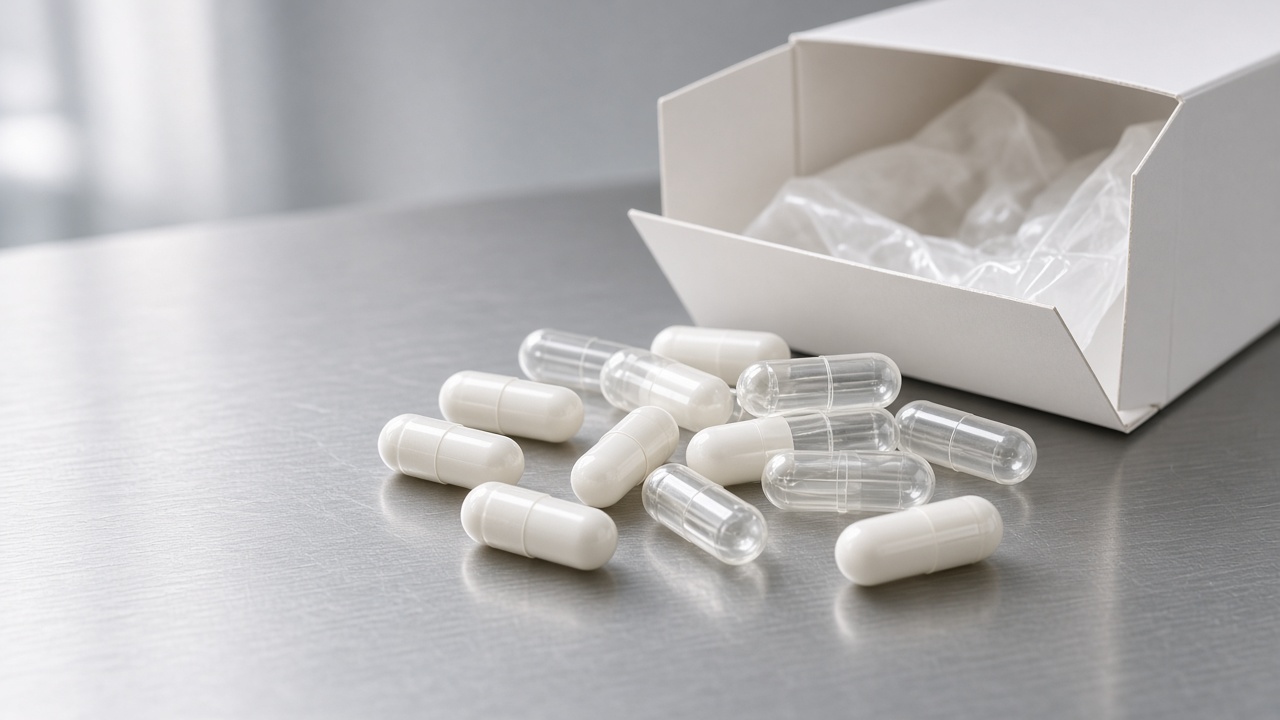
Stock clear shells are the fastest and cheapest path to a first production run. Coloured and opaque shells support brand differentiation and light protection for sensitive fills. Printed logos or text are available, but printed and custom-coloured shells usually carry a higher minimum order and a longer lead time than stock clear.
Raise colour and print early in the project — after the filling trial is the wrong moment to discover an eight-week print lead time.
5. What documentation must travel with every lot?
At minimum, insist on:
- Lot-specific Certificate of Analysis (identity, moisture, disintegration, microbial limits)
- Spec sheet and SDS
- Allergen, GMO and gluten statements as your market requires
- BSE/TSE-free statement for gelatin shells
- Kosher and/or Halal certificates when those claims appear on your label
- Traceability back to the shell manufacturer — not only the reseller
A generic brochure is not a COA. If microbial or moisture results are missing, treat that as a red flag, not a paperwork delay.
6. How is supply structured — carton stock or “we’ll source it”?
Empty capsules should be treated as dedicated stock, not as an afterthought bought in when the active arrives. Ask:
- What sizes and materials are held in US inventory?
- What is the MOQ (often one carton; count varies by size)?
- What is the lead time from stock versus made-to-order / printed?
- Can shells ship loose to your filler, or be scheduled into the same contract manufacturing run as the fill so shell and product release against one batch record?
A supplier who cannot answer those questions in writing is not ready for your production calendar.
7. Who owns the fill — you, or a turnkey partner?
If you fill in-house, you need shells that run on your machine, with consistent join quality and documented disintegration. If a partner encapsulates for you, lock shell size, material and colour into the master batch record so every campaign matches the first validated run.
Changing shell mid-lifecycle without a change control is how brands invent unexplained dissolution and appearance complaints.
A practical shortlist before you place the PO
- Target dose + measured bulk density → confirmed size
- Label claim (vegan / vegetarian / gelatin OK) → gelatin or HPMC
- Fill hygroscopicity → moisture expectation and storage plan
- Branding needs → clear vs colour vs print, with real lead times
- Document pack required for your QA release
- Stocked sizes, MOQ, and ship-to (your plant vs CM run)
- Written confirmation that the next lot will match the approved shell
What Zenith supplies
We hold gelatin and vegetarian HPMC empty hard capsules in sizes 000, 00, 0, 1, 2, 3 and 4 — clear, coloured, opaque and printed — as dedicated US stock rather than a last-minute buy-in. Typical MOQ is one carton (count varies by size); stocked lines usually ship in 3–7 business days. Every lot ships with a lot-specific COA covering identity, moisture, disintegration and microbial limits, with traceability back to the shell manufacturer. Shells can ship loose to your filling line or be drawn straight into a Zenith contract manufacturing run.
Send the target dose, bulk density and claim (gelatin or HPMC) and we will confirm size, lead time and documentation before you commit to bottles and labels.
Product: https://zenithnutraproducts.com/products/empty-capsules Quote: https://zenithnutraproducts.com/quote
Planning a fill with a co-man? Use the contract manufacturing RFQ checklist to lock MOQs, timelines and document packs before you award the run.
Related questions
Which capsule size should I choose for a 500 mg fill?
It depends on bulk density. At higher density, size 0 may hold ~500 mg comfortably; at lower density you may need size 00. Measure density and confirm with a fill trial before ordering printed shells or bottles.
Is HPMC better than gelatin?
HPMC is better when you need a vegetarian or vegan claim, or when the fill is moisture-sensitive. Gelatin is often better when machine speed and cost matter more and an animal-derived shell is acceptable. Choose for the claim and the fill, not for a generic ranking.
Can empty capsules be printed with our logo?
Yes. Printed and custom-coloured shells are available, usually with a higher MOQ and longer lead time than stock clear. Raise print requirements at the start of the project.
What documents should come with every empty capsule shipment?
A lot-specific COA (identity, moisture, disintegration, microbes), SDS, spec sheet, allergen/GMO statements as required, BSE/TSE statement for gelatin, and Kosher/Halal certificates when those claims apply — plus traceability to the shell manufacturer.